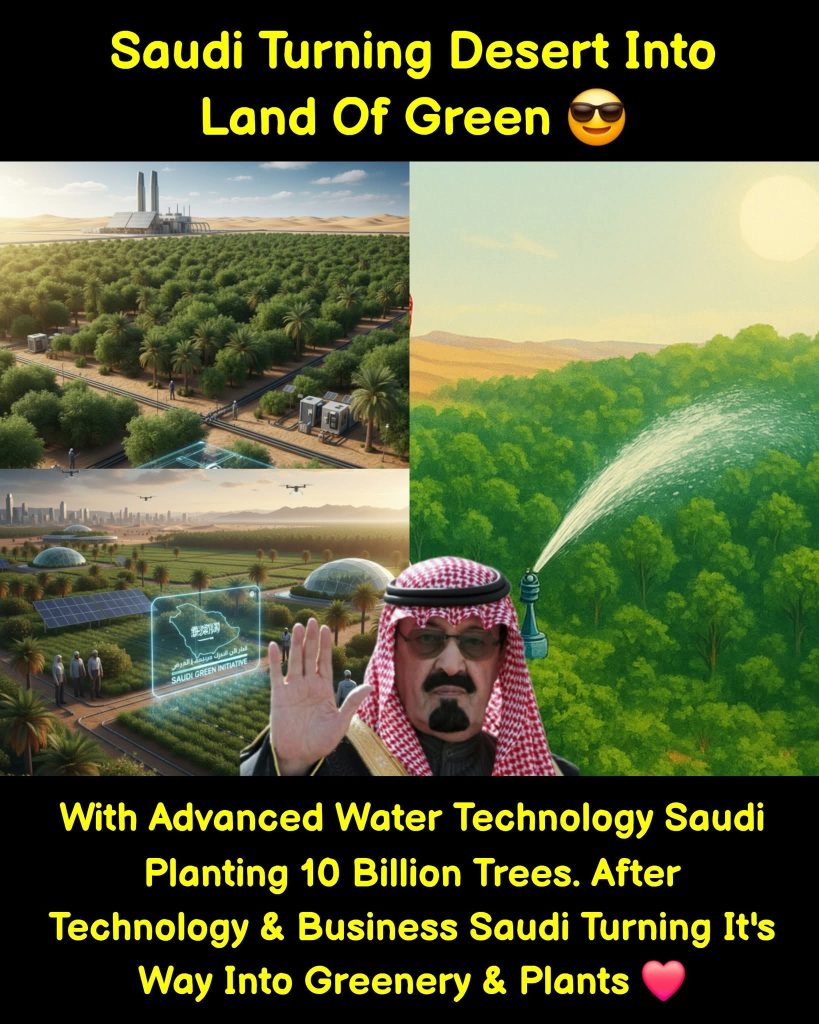
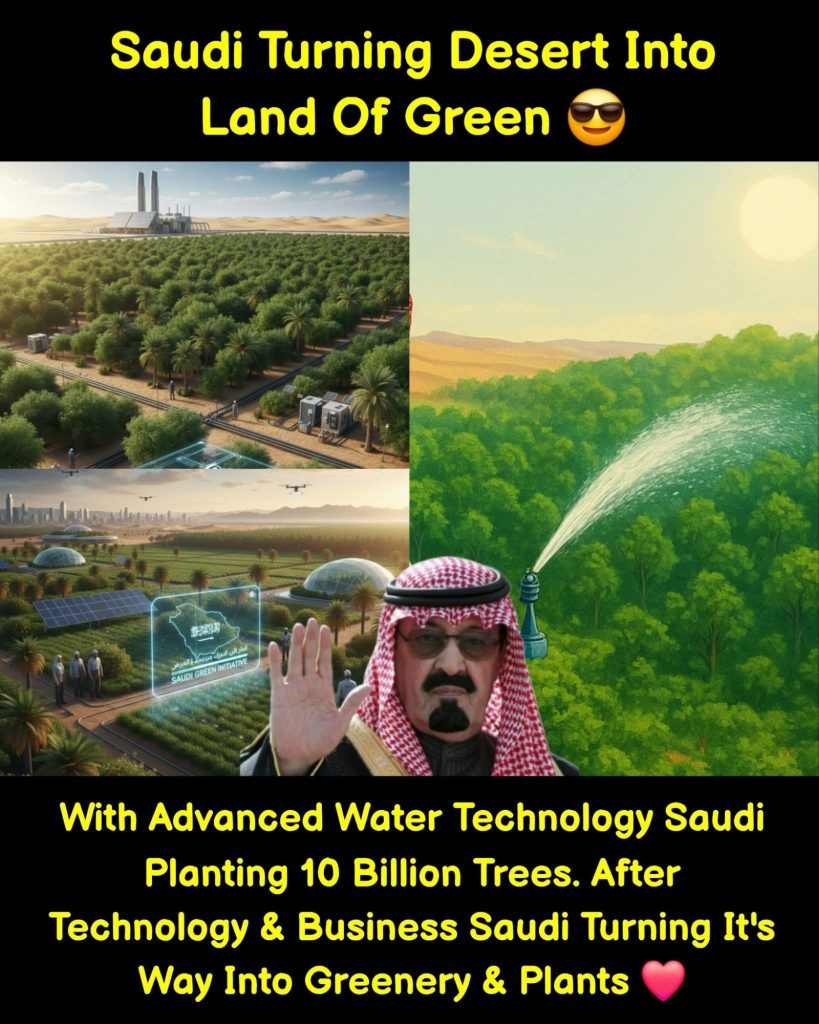
Saudi Arabia’s Green Initiative aims to plant 10 billion trees, restore ecosystems, and lead the world in sustainable desert transformation.
A New Vision Rising from the Sands
For decades, Saudi Arabia has been synonymous with oil, desert, and blazing sun. But as the world transitions toward sustainability, the Kingdom is rebranding itself — not just as a global energy leader but as a pioneer in green transformation.
Under Crown Prince Mohammed bin Salman’s Saudi Green Initiative (SGI), the nation plans to plant 10 billion trees, restore 40 million hectares of degraded land, and make half of its energy green by 2030.
That’s not just a policy — it’s a reimagining of what Saudi Arabia can be.
The Genesis of the Saudi Green Initiative
The seeds of the initiative were first sown in March 2021, when the Crown Prince announced the dual programs — Saudi Green Initiative and Middle East Green Initiative.
The goal:
- Reverse the damage caused by decades of oil exploitation.
- Reduce carbon emissions by more than 278 million tons per year.
- Lead the Arab world toward a sustainable and diversified future.
This move aligns with Vision 2030, Saudi Arabia’s master plan to diversify its economy beyond oil. What’s unique is how environmental action has become a central pillar of that vision — not just a side project.
(Source: Arab News, UN Environment Programme)
Planting 10 Billion Trees: A Desert Dream Takes Root
How do you turn an arid land into a green paradise? For Saudi Arabia, the answer lies in technology, innovation, and global collaboration.
The plan involves:
- Smart irrigation systems powered by renewable energy.
- Desalinated water pipelines to support reforestation in dry zones.
- Drone-based seeding for faster, efficient planting.
Government reports say that pilot projects in Riyadh, Jeddah, and Al-Ahsa have already shown signs of success — trees surviving extreme heat with minimal water.
The Green Riyadh Project alone aims to plant 7.5 million trees, reducing city temperatures by 2°C and improving air quality dramatically.
Renewable Energy: Beyond Oil
Saudi Arabia’s green journey isn’t limited to trees — it’s transforming its energy infrastructure.
The country is building Neom, a futuristic $500-billion smart city powered entirely by renewable energy. Neom’s subproject, The Line, is a 170-km linear city designed to run on clean hydrogen, solar, and wind power.
Meanwhile, the Sakaka Solar Power Plant, the Kingdom’s first utility-scale solar project, has already begun producing enough energy to power 75,000 homes.
And in a historic shift, Saudi Arabia joined the Global Methane Pledge, committing to cut methane emissions by 30% by 2030 — a major leap for one of the world’s largest oil producers.
(External source: Reuters)
From Fossil Fuels to Forests: A Paradigm Shift
It’s not easy for a nation whose wealth was built on oil to shift toward green goals. But Saudi Arabia’s leadership sees sustainability as a new form of wealth — ecological, reputational, and economic.
By investing billions into carbon capture, renewable energy, and afforestation, the Kingdom is proving that oil nations can still lead the climate revolution.
In a global context, this signals a future where Middle Eastern economies compete not in oil barrels but in green innovation.
Challenges in Turning Sand into Soil
While the vision is bold, challenges remain:
- Water scarcity: With average rainfall below 100 mm annually, sustaining greenery is a logistical nightmare.
- Soil fertility: Large tracts of desert lack the nutrients needed for vegetation.
- High costs: Reforestation in arid climates can cost up to 20x more than in temperate regions.
Saudi scientists are testing salt-tolerant plant species and biochar soil technology to overcome these barriers. Meanwhile, local universities like King Abdullah University of Science and Technology (KAUST) are conducting research into AI-driven irrigation optimization.
(External reference: Nature Middle East)
Empowering Communities: Green Jobs and Education
This green transition is also a human story.
Over 200,000 new jobs are expected to emerge in:
- Renewable energy installation and maintenance.
- Sustainable agriculture and forest management.
- Environmental engineering and education.
Schools and universities are integrating climate studies and green entrepreneurship into curricula, nurturing the next generation of Saudi environmental leaders.
It’s a transformation of not just land — but mindset.
The Role of Technology in Saudi’s Green Future
Saudi Arabia is leveraging AI, IoT, and drones to make this massive project efficient and trackable.
- AI-powered analytics measure soil moisture and predict ideal planting times.
- Satellite imaging monitors forest health and carbon absorption.
- Smart water grids reduce waste in agriculture and landscaping.
Even oil companies like Aramco are investing in green AI projects to reduce emissions from refining and logistics.
The Kingdom’s belief is simple: if technology created the crisis, technology can also solve it.
The Middle East Green Initiative: Regional Unity for a Common Goal
Saudi Arabia’s environmental ambitions aren’t confined by borders. The Middle East Green Initiative (MGI) brings together countries from across the region — including UAE, Egypt, and Jordan — to plant 50 billion trees collectively.
This makes it one of the largest reforestation efforts in human history.
Beyond trees, the initiative promotes regional collaboration in:
- Clean energy development
- Water management innovation
- Carbon reduction projects
It’s climate diplomacy — desert style.
Women at the Heart of the Green Revolution
Interestingly, Saudi Arabia’s Green Mission has created new spaces for women’s participation in science, sustainability, and environmental activism.
From research labs to eco-startups, women are at the forefront of reimagining Saudi’s environmental identity.
This aligns perfectly with the country’s broader Vision 2030 goals — empowering women in all sectors and breaking traditional barriers.
A Tale of Two Transformations: From Coal to Compassion
While Saudi Arabia transforms its deserts, stories from around the world remind us that sustainability is as much about humanity as environment.
Consider this powerful example:
👉 The Coal-Covered Father Who Won the Internet’s Heart — A True Story of Love and Dedication 🖤👨👦
Just as that father’s sacrifice symbolized personal resilience, Saudi Arabia’s efforts represent national resilience — the courage to evolve, to rebuild, and to care for the generations to come.
Environmental Diplomacy: Saudi Arabia’s Global Standing
Through the Saudi Green Initiative, the Kingdom is stepping into a new global role — that of a climate collaborator rather than a carbon culprit.
It has pledged partnerships with:
- The United Nations Environment Programme (UNEP)
- The World Economic Forum
- Neighboring Gulf countries for joint climate innovation
Saudi Arabia’s message is clear: sustainability is not Western; it’s universal.
This leadership move could redefine Middle Eastern geopolitics — from oil alliances to green alliances.
Criticism and Caution: Is It Greenwashing?
Not everyone is convinced. Environmental watchdogs and NGOs have raised concerns about:
- The continued expansion of oil production despite climate pledges.
- The lack of transparent reporting on emission reduction metrics.
However, Saudi officials argue that transformation takes time, and using oil revenues to fund green projects is not hypocrisy — it’s pragmatic reinvestment.
Time will tell whether the balance holds.
(External reference: BBC News)
The Cultural Green Awakening
From Riyadh’s eco-friendly coffee houses to youth-led tree-planting drives, environmental consciousness is now trending among Saudi’s younger population.
Social media campaigns like #GreenSaudi and #TreeForFuture are drawing millions of interactions, signaling that the movement is not just top-down — it’s grassroots and generational.
Looking Toward 2030 and Beyond
By 2030, Saudi Arabia aims to:
- Achieve net-zero emissions by 2060.
- Ensure 50% renewable energy in national consumption.
- Reforest 40 million hectares of land.
If achieved, this would transform not only Saudi’s ecosystem but its global reputation — from one of the biggest carbon emitters to a symbol of ecological rebirth.
Conclusion: The Oasis of Tomorrow
Saudi Arabia’s Green Mission is not just an environmental policy — it’s a story of redemption, reinvention, and responsibility.
The same sands that once buried life may now nurture forests, and the same oil that fueled the world may now fund its healing.
The Kingdom’s journey from desert to green canopy serves as proof that no land is too barren — and no vision too bold — to be reborn.
Internal Link:
👉 The Coal-Covered Father Who Won the Internet’s Heart — A True Story of Love and Dedication 🖤👨👦
External References: