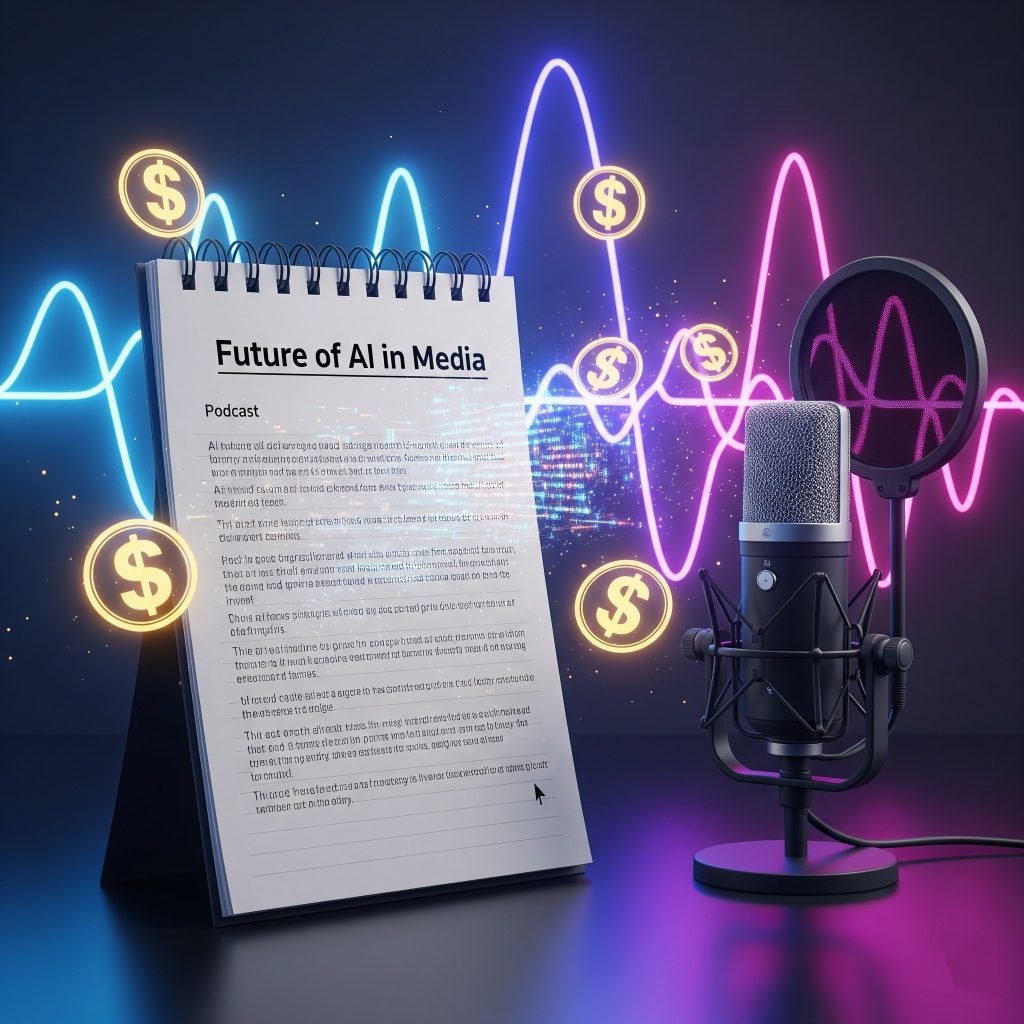
Discover how to make money writing AI-powered podcast scripts. Perfect for creators and freelancers looking for income opportunities in 2025.
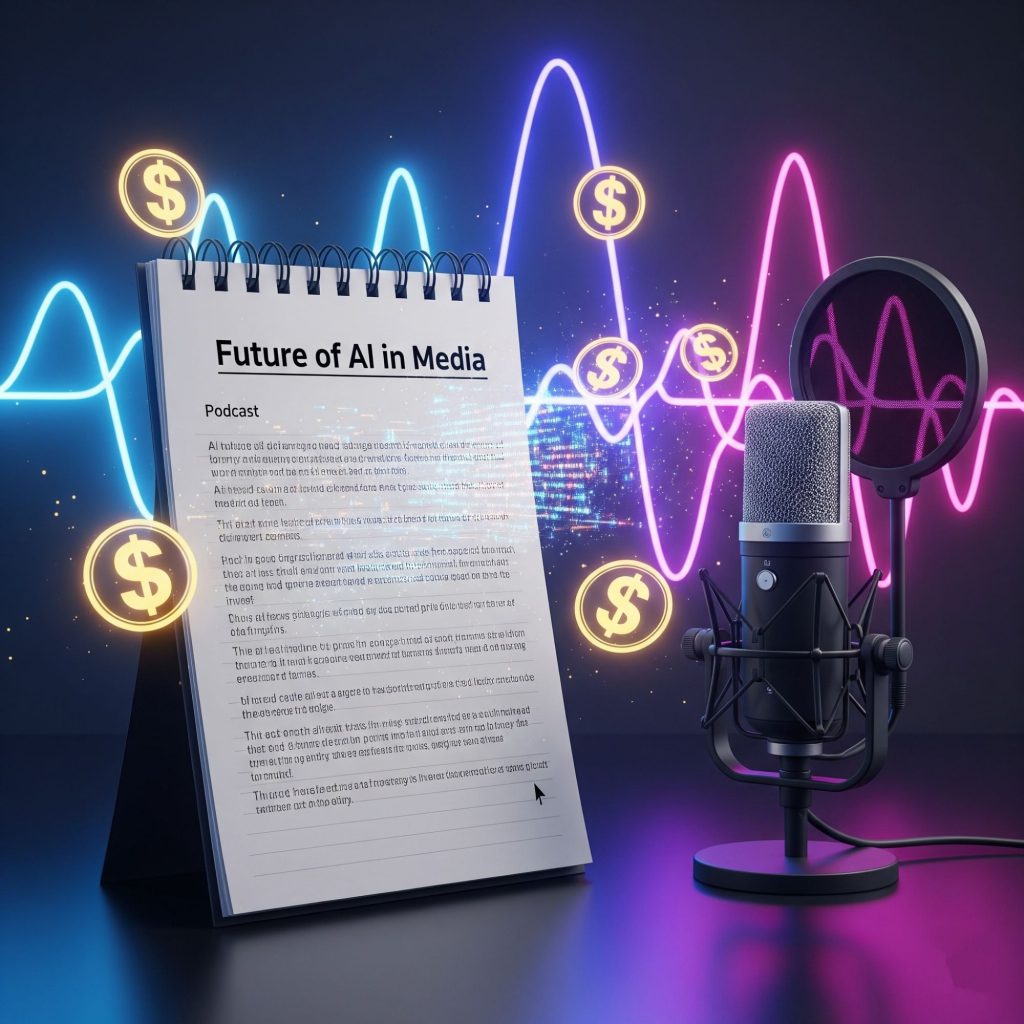
How to Make Money with AI Podcast Scripts — Complete 2025 Guide
Create, package and monetize AI-assisted podcast scripts for podcasters, agencies and creators — step-by-step, no fluff.
This guide covers product ideas, tools, workflows, monetization models (one-off, subscriptions, white-label), pricing, SOPs, daily routines and a 90-day roadmap so you can start selling AI podcast scripts and scale to recurring income.
Why Sell AI Podcast Scripts in 2025
Podcasting remains a strong content channel, but many creators struggle with consistent, high-quality scripts. AI lets you produce well-structured, on-brand episode scripts quickly: research, outline, hooks, segues, ad slots, intros/outros, and show notes. That speed combined with human polishing creates a service/product creators will pay for.
Two major value props: time saved (producers can publish more) and conversion (better scripts → higher listener retention → better monetization). Both justify good pricing.
Product Ideas & Formats (Pick 2–3 to start)
1) One-Off Episode Script (Done-for-You)
Deliver a fully fleshed 20–45 minute episode script: hook, narrative, interview questions, transitions, ad copy, outro and show notes. Add optional TL;DR and timestamps.
2) Monthly Script Subscription (SaaS-like)
Monthly credits: 4 scripts/month, or 8 short-form shorts + 2 long episodes. Ideal for busy creators and agencies.
3) Niche Script Packs (Products)
Pre-built script outlines and templates for niche shows: “10 fitness episode templates”, “Startup interviews pack”, “History mini-series scripts”. Sell as digital downloads.
4) Interview Question Packs & Research Briefs
Sell curated interview questions + a research brief on the guest including high-impact anecdotes and facts to use during the episode.
5) Ad Scripts & Host-Read Copy
Short package: 15–60s ad scripts tailored to sponsor/product. Offer variants for host-read and produced spots.
6) White-label Agency Service
Offer voice agencies or production houses ready-to-publish scripts under their brand (monthly contract).
7) Teaching & Templates
Courses on “AI-assisted podcast scripting” and editable Notion/Canva script templates for self-serve buyers.
Tools & Comparison Table — Build Your Stack
Choose tools for research, writing, editing, and delivery. Here’s a practical set and why they matter.
| Tool | Primary Use | Best For |
|---|---|---|
| ChatGPT / Claude | Script drafting, outlines, hooks, ad copy | Natural-sounding scripts, multi-variant testing |
| Perplexity / Elicit | Quick research and source gathering | Fact-checking and generating research briefs |
| Descript | Transcription + edit-through-text | Turn interviews into scripts and repurpose recordings |
| Notion / Google Docs | Collaboration & version control | Client approvals and comments |
| Canva / Figma | Create show notes, audiograms, visuals | Deliverables and promo assets |
| Audacity / Adobe Audition | Audio cleanup & sample delivery | Produce voiceover demos and sample reads |
| Zapier / Make | Automations (orders → drafts → notifications) | Scale intake and delivery workflows |
Minimum viable stack: ChatGPT for drafts, Perplexity for research, Google Docs/Notion for client collaboration, Descript for repurposing and demo generation.
Script Creation Workflow — MVP to Premium
Below is a repeatable process you can follow for every script type. Use this to create consistent quality and reduce back-and-forth.
Step 1 — Intake & Brief
Collect: podcast name & format, episode length, target audience, episode goal (educate/convert/entertain), guest info (if any), must-cover points, tone sample, and references (3 example episodes the client likes).
Step 2 — Research & Fact Pack
Use Perplexity/Elicit to collect 6–12 verifiable facts, quotes, stats and links relevant to the topic/guest. Compile a one-page brief for the writer and client preview.
Step 3 — Outline & Hooks (AI)
Prompt ChatGPT to generate 3 episode outlines with different tones/angles and 5 hook options for the first 30 seconds. Send outlines to client for quick selection (fast approval reduces rewrites).
Step 4 — Draft Script (AI + Human Edit)
Generate full script using the selected outline. Human editor polishes: tighten phrasing, ensure vocal-friendly sentences (shorter clauses), add ad breaks and timestamps, and mark breath points and emphases.
Step 5 — Optional Demo Read
Optionally create a short demo audio (30–90s) using Descript or ElevenLabs to showcase flow and tone (helps clients approve faster).
Step 6 — Client Review & Revisions
Offer 1–2 rounds of revisions. Capture change requests in-line in Notion/Docs. Keep major structural changes as paid add-ons to avoid scope creep.
Step 7 — Deliverables
Deliver script (Google Doc + PDF), show notes (short summary + timestamps), suggested titles, 3–5 social promo snippets, and 1 audiogram-ready clip (optional).
Packaging, Delivery & Licensing
How you package affects perceived value and conversion.
Standard Delivery Package
- Full episode script (editable doc)
- Show notes with timestamps
- 3 promo captions (Twitter/Instagram/TikTok) and suggested hashtags
- 1 audiogram script snippet (30–60s)
Premium Add-ons
- Demo read (audio sample)
- Guest research brief and suggested questions
- SEO-optimized episode title & long-form blog post conversion
- Localization (translated scripts) or language variants
Licensing & Rights
Be explicit: standard license = client can publish & monetize the episode. Extended license = client can re-sell scripts, use as course material, or white-label. Keep rights clear in the order form to avoid disputes.
Monetization Methods — Multiple Revenue Streams
1) DFY Episode Script (One-off)
High-margin, quick delivery. Good for clients who want a professional single episode or pilot.
2) Monthly Subscriptions
Recurring revenue: tiers based on number of scripts/month, with higher tiers including research, demo reads and promo packs.
3) Template Packs & DIY Guides
Sell templates (Notion/Google Doc) and prompt packs for creators who want to DIY using LLMs.
4) Agency / White-label Contracts
Sell long-term contracts to production houses, agencies and networks — scale via a small team of editors and writers.
5) Bundles & Cross-sells
Bundle scripts with services like audio editing, video repurposing and social promos (cross-sell with related TrendVibz services: audio/video editing & social). Upsell is where LTV grows fastest.
6) Courses & Workshops
Teach “AI-powered podcast scripting” workshops or create paid courses explaining the system and providing templates.
Pricing Examples & Revenue Math
Price to value and buyer type. Below are practical bands in INR (adjust per market and niche).
One-off Scripts
- Short episode (10–15 min): ₹1,499 – ₹3,499
- Standard episode (20–40 min): ₹3,999 – ₹9,999
- Premium (deep research, guest packages): ₹10,000 – ₹30,000+
Subscriptions & Retainers
- Starter: 4 short scripts/month — ₹6,999 / month
- Creator: 4 full scripts/month + promos — ₹19,999 / month
- Agency: 20 scripts/month + research team — custom pricing (₹75k+)
Revenue example: 10 Creator tier subscriptions at ₹19,999 = ₹199,990/month. Even a small book of monthly subscriptions yields very scalable MRR.
SOPs & Copy-Paste Prompts (Use & Modify)
Prompt: Generate 3 Hook Variants
You are a podcast copywriter. Provide 5 short, curiosity-driven hooks (10-20 words max) for an episode on:
"[TOPIC]"
Include tone tags (e.g., friendly, investigative, motivational). Label each as Hook 1 / Hook 2.
Prompt: Full Episode Draft (40 mins)
Write a detailed 35–45 minute podcast episode script about "[TOPIC]". Use a conversational tone similar to [EXAMPLE SHOW]. Include:
- 3 short opening hooks
- Intro (host + what listeners will learn)
- 4 segments with transitions and 2-4 key points each
- 8 interview questions (if guest-based)
- 2 sponsor ad slots (15-30s) with host-read copy variants
- Outro with CTA and suggested show notes blurb (120 words)
Return timestamps for each segment.
SOP: 48-Hour Delivery (DFY Script)
- Hour 0–2: Collect brief & references.
- Hour 2–6: Research + generate outline + 5 hooks; send outline for client approval (fast approval via checkbox reduces time).
- Hour 6–20: Draft full script in AI; human edit for voice & pacing.
- Hour 20–30: Create show notes + 3 promo captions. Optional demo read (30–60s) with Descript.
- Hour 30–48: Client review & final polish. Deliverables exported and packaged.
Go-to-Market & Client Acquisition
Quick Channels that Convert
- Podcaster communities: Facebook groups, Reddit subs, Clubhouse/Discord communities for podcasters.
- LinkedIn outreach: target podcast hosts, producers, and agencies with samples and quick audits.
- Marketplaces: Fiverr/Upwork for initial clients and testimonials; Gumroad for template packs.
- Partnerships: partner with audio editors, producers and podcast networks to offer scripts as a white-label service.
- Content marketing: write posts on “how scripts improved show retention” and use case studies to drive trust.
Sample LinkedIn DM
Hi [Name], I loved episode [x] — quick idea: a 20–30 minute script + promo pack tailored to your audience could save you hours each episode. I offer a 48-hr pilot script at a discounted price. Want a free 30s sample based on your last episode?
Free samples and short demo reads are powerful — clients visualize the final episode and approve faster.
How to Scale & Productize
- Standardize briefs: structured intake forms that capture everything needed to write with minimal back-and-forth.
- Template library: create modular script templates for common episode types (news roundup, interview, solo, narrative).
- Automate routing: use Zapier/Make to create draft tasks, notify editors, and deliver final files automatically.
- Hire & train: junior writers/editors who follow your checklist and tone guide; keep final human-in-the-loop review for quality.
- Productize: convert common requests into downloadable packs and courses to reduce reliance on billable hours.
- White-label: pitch networks and agencies for steady contracts — create SLAs and monthly reporting dashboards.
Most profitable path: sell subscriptions + run enterprise/agency contracts. Templates and courses add passive income and reduce churn risk.
Recommended Daily Routine for a Podcast Script Business (9–5 style)
- 09:00–09:30 — Sales & intake: check new orders, client messages, and approvals.
- 09:30–12:00 — Deep creative block: outline and draft 1–2 scripts (no interruptions).
- 12:00–13:00 — Research & enrichment: fact-checking, finding quotes and sources.
- 14:00–15:30 — Editing & polishing: human edit on AI drafts and finalize show notes.
- 15:30–16:30 — Marketing & outreach: follow-ups, LinkedIn posts, demo sends.
- 16:30–17:00 — Ops: update templates, QA, and plan next day’s scripts.
If you run subscriptions, schedule a weekly block for onboarding new clients and a monthly block for product development/templates.
90-Day Roadmap — Launch to Monthly Revenue
Days 1–7: Offer & Prototype
- Create 3 polished demo scripts (different formats).
- Build a one-page sales page and intake form (Typeform/Notion).
- Offer 5 pilot scripts at discounted rate to collect testimonials.
Days 8–30: Validate & Market
- Run outreach to 100 podcasters and pitch free sample reads for lead magnet.
- List template packs on Gumroad and run a small social push.
Days 31–60: Productize & Automate
- Create a subscription tier and automated onboarding (Zapier/Make).
- Hire one freelance editor and document SOPs.
Days 61–90: Scale & Secure Contracts
- Close 3–5 monthly subscribers and pitch 2 agencies for white-label contracts.
- Launch a mini-course or workshop and promote to your email list.
By day 90 you should aim for a mix of one-offs, 3–5 subscriptions, and at least one partnership or agency lead.
Legal & Ethical Checklist
- Copyright & sourcing: verify that any quoted material or facts are properly attributed. Avoid copying large chunks from copyrighted sources — summarize and cite.
- Guest consent: if you write for or about specific guests, obtain permission for direct quotes and likeness usage.
- AI disclosure: be transparent if scripts are AI-assisted if required by platform or client preference; some publishers prefer disclosure.
- License clarity: define publishing rights, re-use rights, and resale rights in contracts — especially for white-label or extended licenses.
- Refund & revision policy: clearly state number of revisions included and refund terms to avoid disputes.
Internal TrendVibz Links (Cross-sell & Learn)
- Make Money Editing AI-Generated Videos — bundle script + video repurposing services to increase order value.
- Top AI Tools to Create Viral Social Media Posts — use script snippets for social promos and viral hooks.
- Make Money with AI-Powered Infographics — turn episode research into infographics and sell as premium assets.
- Create AI-Based Audio Content and Sell Online — offer demo reads and audio deliverables as upsells to script packages.
Final Checklist — Launch Your AI Podcast Script Offer
- Pick 1-2 product formats (DFY script + subscription) and create demo assets.
- Set up an intake form and pricing page with clear licensing terms.
- Build 3 pilot scripts and use them as lead magnets for outreach.
- Automate order notifications and delivery drafts with Zapier/Make.
- Offer free short demo reads to convert prospects faster.
- Track KPIs: close rate, average order value (AOV), churn on subscriptions, and time per script to improve margins.
Parting tip: combine AI speed with human polish. Clients pay for reliability and voice — your competitive edge is fast turnaround plus consistently great-sounding, publish-ready scripts.